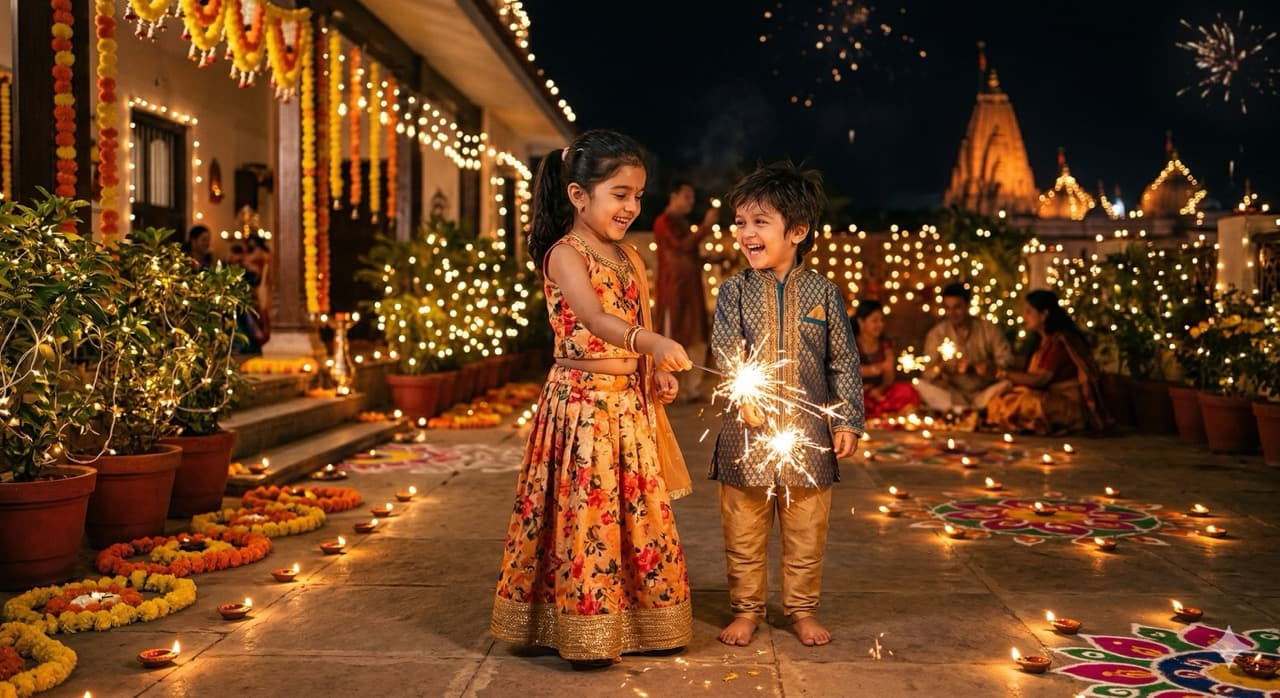
Diwali 2026 falls on Sunday 8 November on most calendars, with Dhanteras on Friday 6 November. With the date close, anything that needs engraving, embroidering or posting has to be ordered now. This guide sorts seven gifts for children by how much lead time each one needs, so you can choose something that will actually arrive.
Diwali is celebrated in Delhi, Melbourne, Toronto and Auckland, by families who have kept every tradition and families who are inventing their own. The ideas below do not assume a particular household.
Order now: gifts that need making or posting
1. A personalised storybook where they are the hero
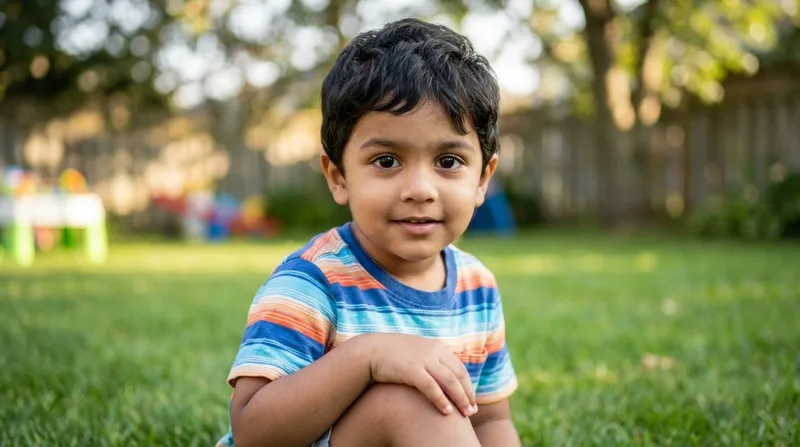
We make these, so weigh this one accordingly. MakeMyStory turns one photo and a moment you describe into a 12-page illustrated book with your child as the hero, with read-aloud narration. There is a Diwali idea for it: diyas, rangoli and sweets, written around how your family celebrates.
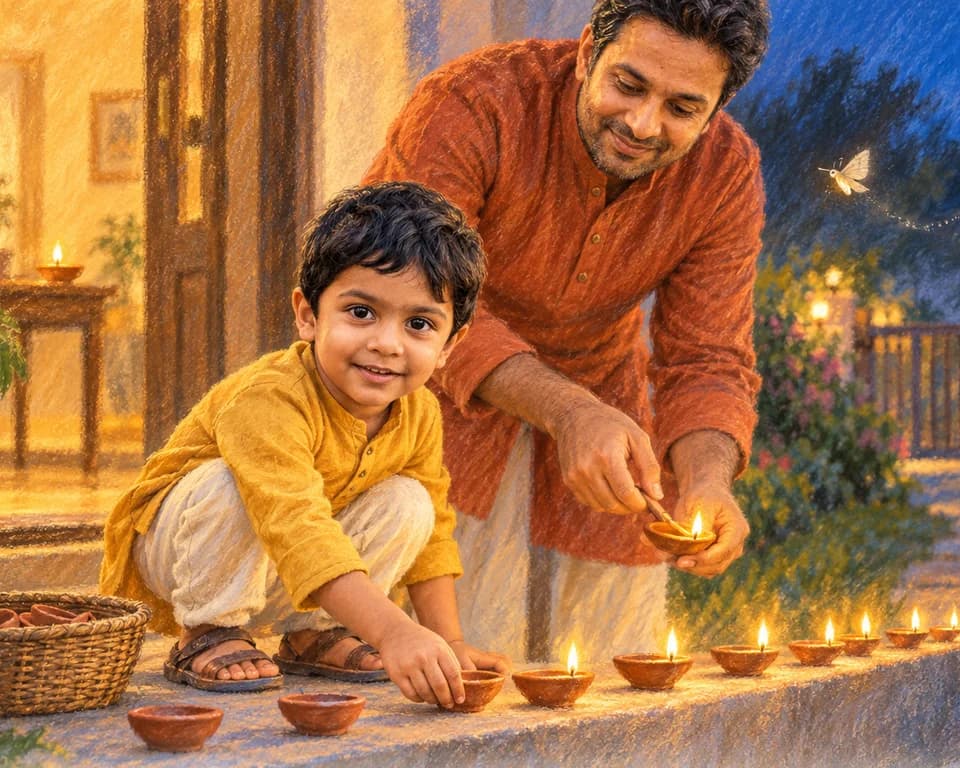
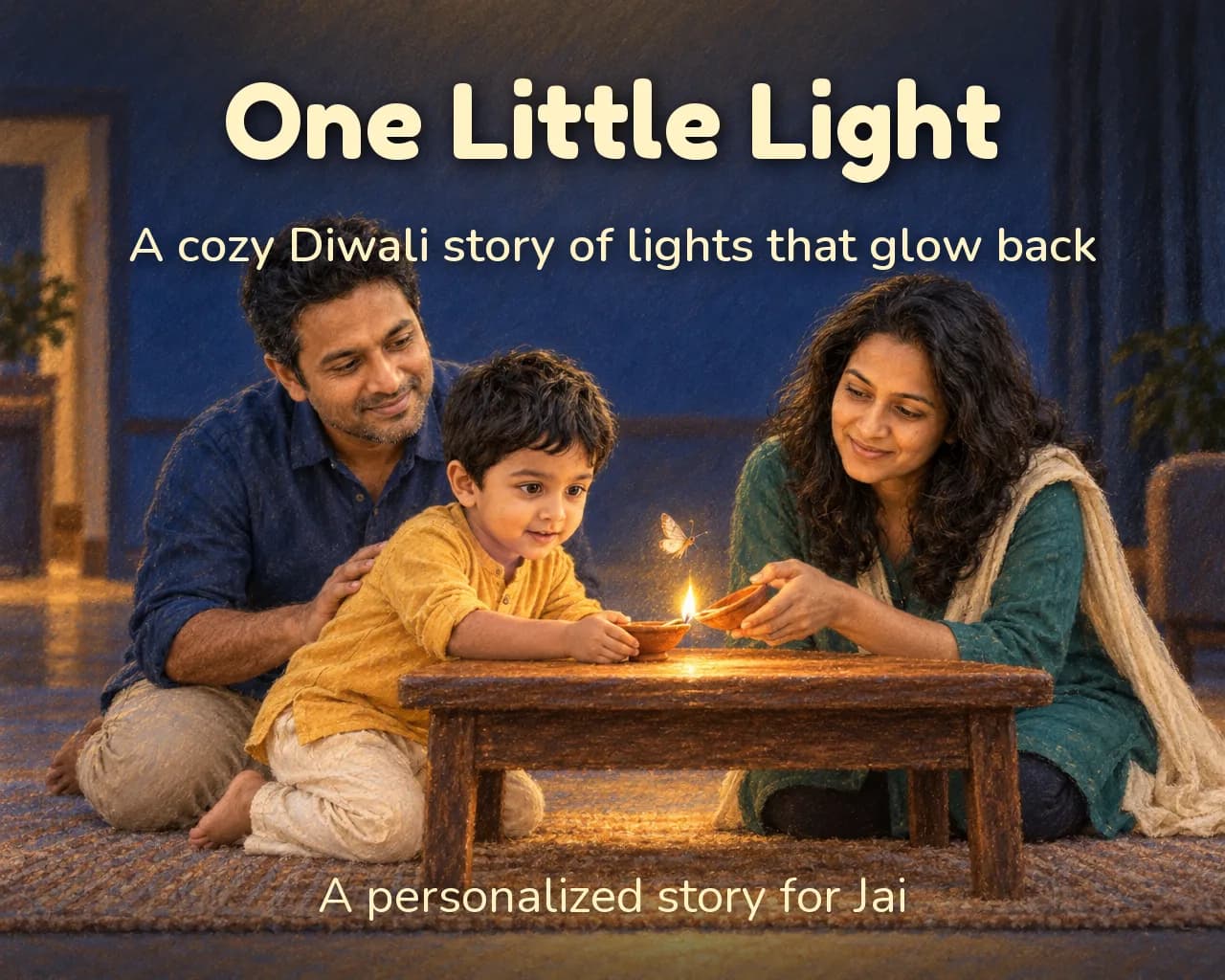
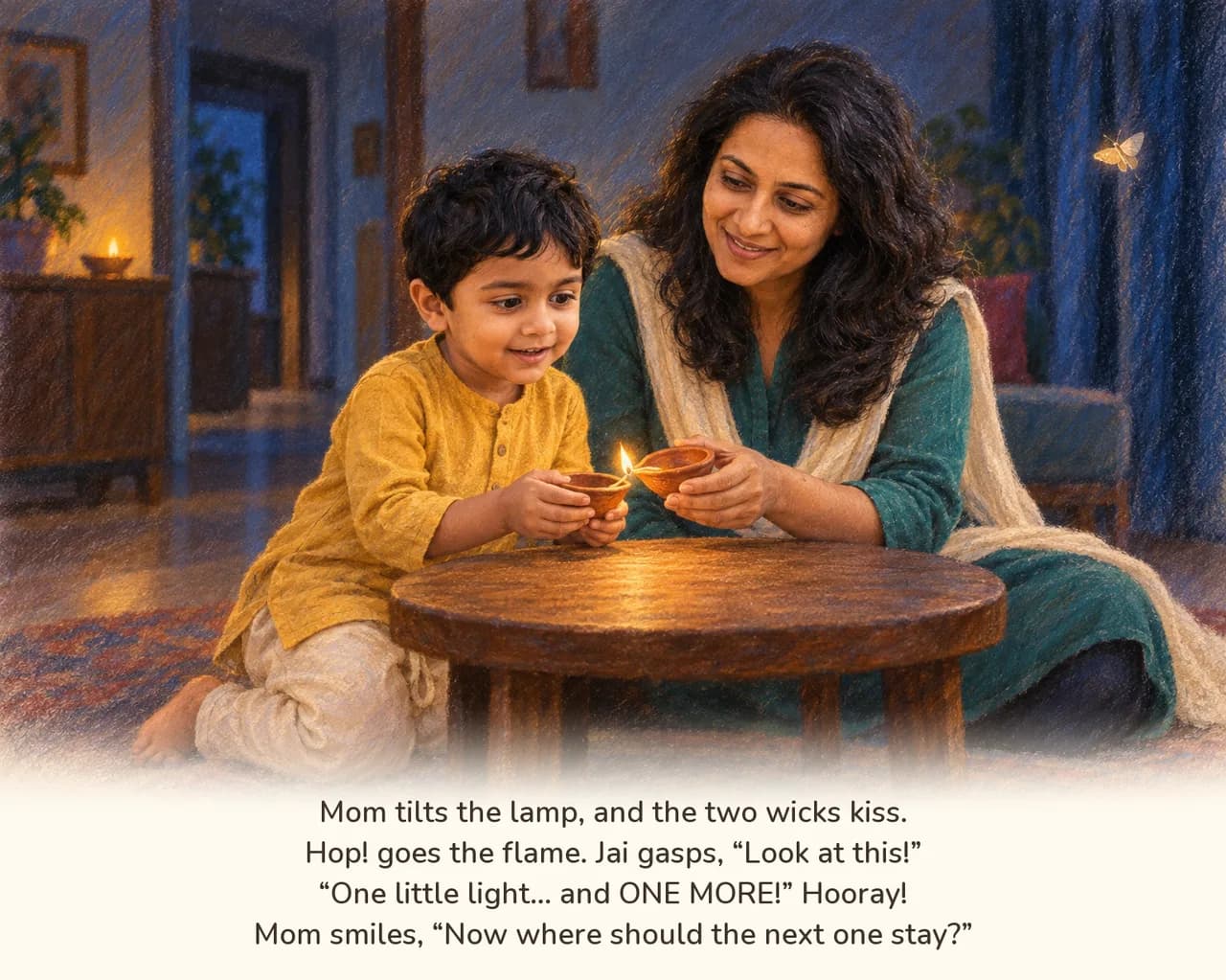
Mom tilts the lamp, and the two wicks kiss. Hop! goes the flame. Jai gasps, “Look at this!” “One little light... and ONE MORE!” Hooray! Mom smiles, “Now where should the next one stay?”
Page 2
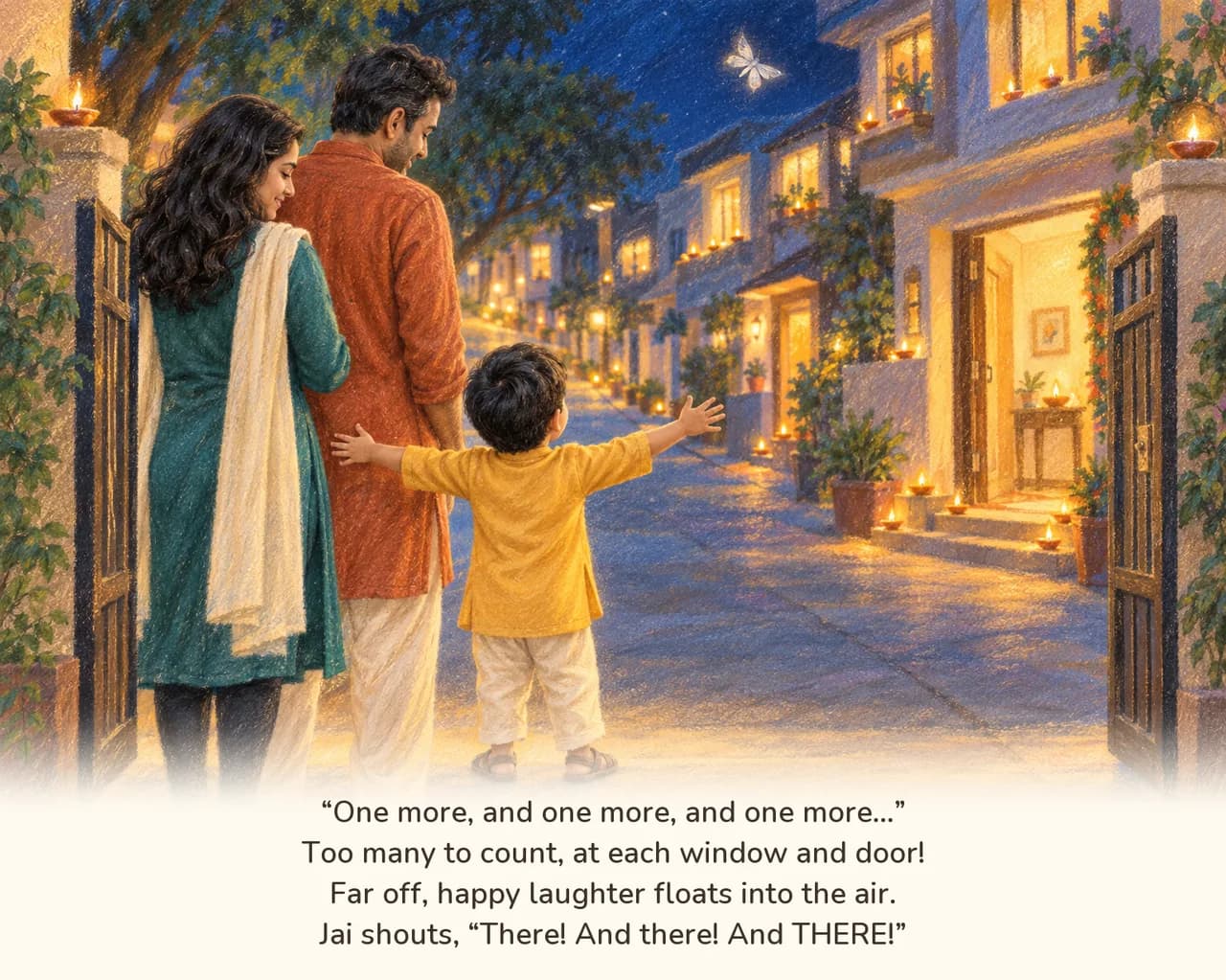
“One more, and one more, and one more...” Too many to count, at each window and door! Far off, happy laughter floats into the air. Jai shouts, “There! And there! And THERE!”
Page 9
On timing: the finished pages are made once you confirm the story, so start a little before you need it. A printed copy also needs printing and shipping time, and the date at checkout is the one to trust. See the Diwali book idea for how the story is built and what you can add.
2. A name-embroidered kurta or lehenga
A kurta, lehenga or salwar with the child’s name or initial on the hem or collar becomes the outfit they ask for every festival. Tailors and embroidery shops need lead time, so ask for a finish date before you pay, and add a little margin.
3. An engraved thali or a painted nameboard
A brass or copper thali engraved with a child’s name, or a painted wooden nameboard for their door, ends up in family photos and, later, in the box of things they keep. Engraving and painting are made to order, so confirm dates first.
Soon: gifts you can arrange yourself
4. A craft class or workshop
Making diyas, painting rangoli, a Bharatanatyam or Bollywood dance trial, a cooking session with a local cook. The gift is gone the moment it is over, but the afternoon becomes a story the child tells. Book a place now, because festival-week sessions fill up.
5. A memory book with prompts
A blank scrapbook with prompts for family stories: “a time my grandparent made me laugh”, “our family’s favourite Diwali dish”, “the best thing that happened this year”. Print the prompts at home. It becomes a family project that grows over the years.
Even on the day
6. A handwritten story
Write a few lines about how the child helped with the diyas this year, and read it aloud. It is free, it takes ten minutes, and it is the one gift on this list nobody else can give.
7. A shared tradition, started on the day
Light the first diya together, or choose one sweet to make every year. A child who helps with the lighting, under a grown-up’s steady hands, has a Diwali they were part of rather than watched.
Sending a book as a gift from a distance
If the child is in another city or country, you do not need their photo. You buy a gift code, send it to the family, and a parent or guardian redeems it, adds the photo and chooses the story. It is a good fit for grandparents and aunts and uncles. Check the pricing page for prices in your country.
A quick age guide
Ages 1–2: something to look at and hold with a grown-up reading along: a sensory book, or a short, rhythmic story. Ages 3–5: the age of “read it again”, so a story about them, or a first craft session, lands well. Ages 6–8: something they can help make, such as a recipe, a rangoli or a scrapbook. For how a story changes with age, see stories by age.
Whatever you choose, the gift is the thought: I see this child, and I chose this for them.

